

Raft
Raft
Raft
Making student wellness engaging through gamification
Making student wellness engaging through gamification
Making student wellness engaging through gamification
5 minutes read | 2 minutes if you scan
5 minutes read | 2 minutes if you scan
5 minutes read | 2 minutes if you scan
My Role
My Role
My Role
User Research & Synthesis,
Gamification Strategy,
Prototyping, Testing
Complete UX Process.
From Research to Prototyping.
User Research & Synthesis,
Gamification Strategy,
Prototyping, Testing
Timeline
Timeline
Timeline
August 2025 - November 2025
August 2025 - November 2025
August 2025 - November 2025
Tools Used
Tools Used
Tools Used
Figma | Adobe Illustrator | Claude | Photoshop
Figma | Adobe Illustrator | Claude | Photoshop
Figma | Adobe Illustrator | Claude | Photoshop
At a glance
At a glance
At a glance
Raft is a mobile platform designed for college students to build sustainable habits through social accountability. By sorting students into "Clubs," the app transforms individual wellness into a team sport, focusing on achievable daily challenges in nutrition, sleep, and activity. Without the toxicity of calorie counting or weight tracking.
Raft is a mobile platform designed for college students to build sustainable habits through social accountability. By sorting students into "Clubs," the app transforms individual wellness into a team sport, focusing on achievable daily challenges in nutrition, sleep, and activity. Without the toxicity of calorie counting or weight tracking.
Raft is a mobile platform designed for college students to build sustainable habits through social accountability. By sorting students into "Clubs," the app transforms individual wellness into a team sport, focusing on achievable daily challenges in nutrition, sleep, and activity. Without the toxicity of calorie counting or weight tracking.

Background
Background
Background
Moving into a hostel means leaving behind a home where nutrition was managed by parents and health was an afterthought.
I observed this "wellness gap" firsthand on campus. Without the structure of home, students were either overwhelmed by high-barrier fitness regimes that felt like a full time job, or they felt completely isolated in their health journey.
Current apps focus on metrics (weight/calories) rather than core health.
Moving into a hostel means leaving behind a home where nutrition was managed by parents and health was an afterthought.
I observed this "wellness gap" firsthand on campus. Without the structure of home, students were either overwhelmed by high-barrier fitness regimes that felt like a full time job, or they felt completely isolated in their health journey.
Current apps focus on metrics (weight/calories) rather than core health.
Moving into a hostel means leaving behind a home where nutrition was managed by parents and health was an afterthought.
I observed this "wellness gap" firsthand on campus. Without the structure of home, students were either overwhelmed by high-barrier fitness regimes that felt like a full time job, or they felt completely isolated in their health journey.
Current apps focus on metrics (weight/calories) rather than core health.
User Insights
User Insights
User Insights
Understanding students' behavior patterns towards their health.
Understanding students' behavior patterns towards their health.
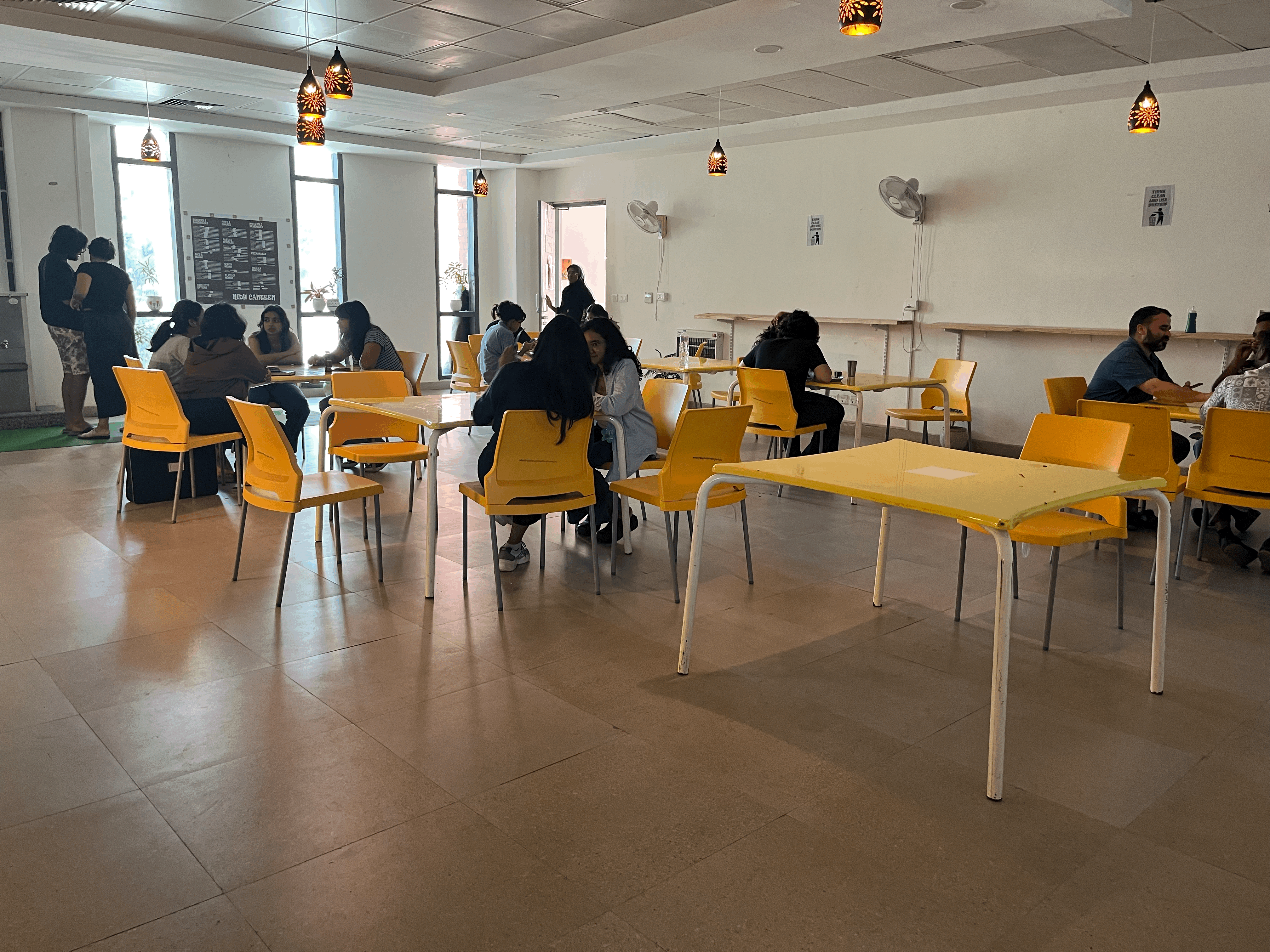
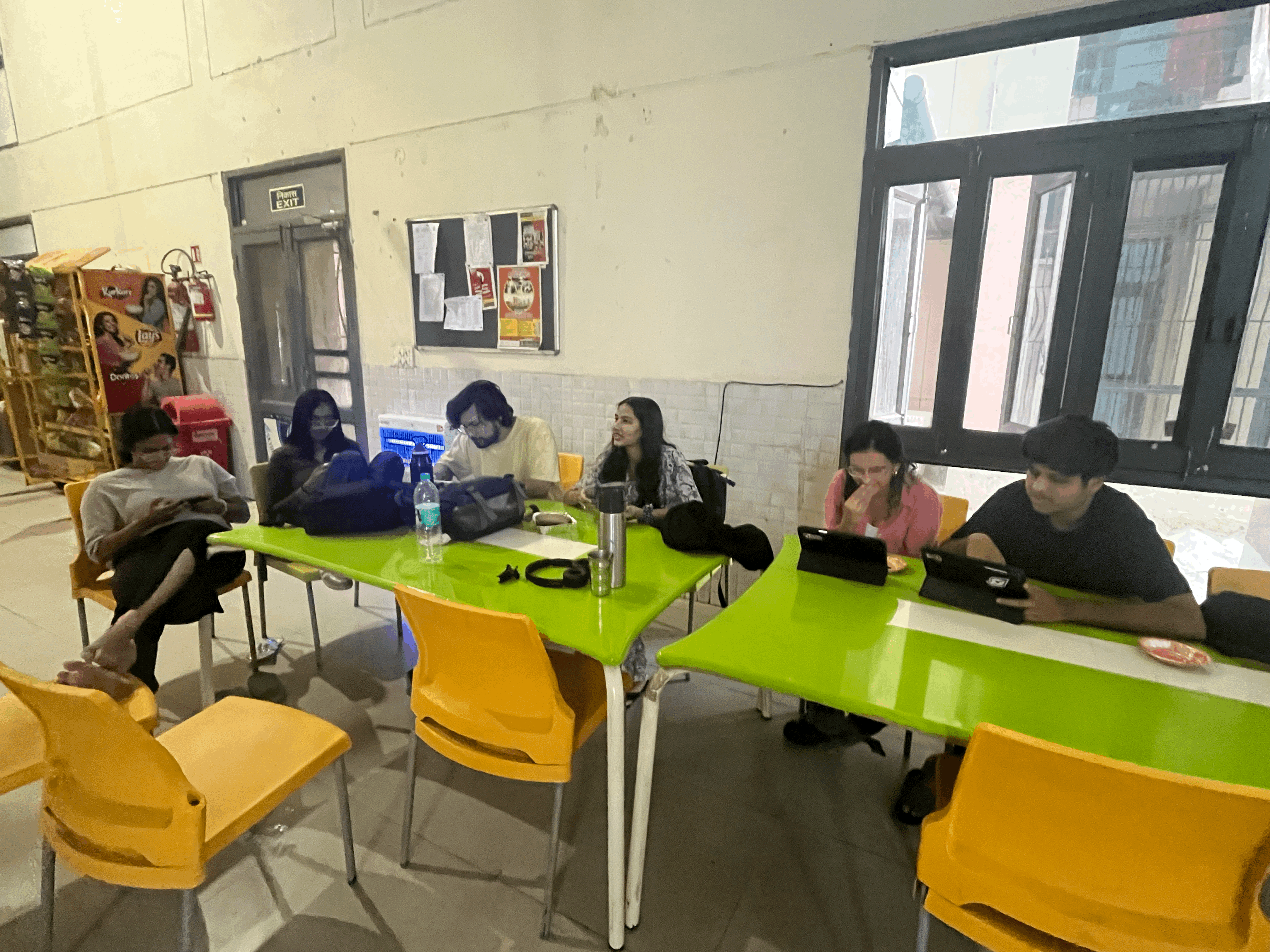
I conducted semi-structured interviews and shadowing sessions with a diverse cross-section of students at NID Haryana. My goal was to understand the mental models of health across different lifestyles (not just the fitness-conscious.)
I conducted semi-structured interviews and shadowing sessions with a diverse cross-section of students at NID Haryana. My goal was to understand the mental models of health across different lifestyles (not just the fitness-conscious.)

Duration
Duration
30–45 minute interviews and shadowing sessions during meal times and evening activity.
30–45 minute interviews and shadowing sessions during meal times and evening activity.
30–45 minute interviews and shadowing sessions during meal times and evening activity.
Research Sample
Research Sample
Total: 14 students (6 Male, 8 Female).
Disciplines: Industrial Design (6), Communication Design (5), Textile Design (3).
Year of Study: Mix of Foundation, 2nd, 3rd, and Final year students.
Lifestyle Profiles: 2 'Active' (Gym/Sports), 5 'Moderate' (Walkers), 7 'Sedentary' (Work-focused).
Total: 14 students (6 Male, 8 Female).
Disciplines: Industrial Design (6), Communication Design (5), Textile Design (3).
Year of Study: Mix of Foundation, 2nd, 3rd, and Final year students.
Lifestyle Profiles: 2 'Active' (Gym/Sports), 5 'Moderate' (Walkers), 7 'Sedentary' (Work-focused).
Total: 14 students (6 Male, 8 Female).
Disciplines: Industrial Design (6), Communication Design (5), Textile Design (3).
Year of Study: Mix of Foundation, 2nd, 3rd, and Final year students.
Lifestyle Profiles: 2 'Active' (Gym/Sports), 5 'Moderate' (Walkers), 7 'Sedentary' (Work-focused).
Insight 1
Insight 1
The "All-or-Nothing" Fallacy
The "All-or-Nothing" Fallacy
Students equate health only with high-intensity workouts, which is a full time job in itself. Whereas the 15 minute post meal walk goes unnoticed.
Students equate health only with high-intensity workouts, which is a full time job in itself. Whereas the 15 minute post meal walk goes unnoticed.
Students equate health only with high-intensity workouts, which is a full time job in itself. Whereas the 15 minute post meal walk goes unnoticed.
Insight 2
Insight 2
Social Influencing
Social Influencing
Motivation on campus is a shared resource. Students are 3x more likely to engage in a physical activity if their friend is involved.
Motivation on campus is a shared resource. Students are 3x more likely to engage in a physical activity if their friend is involved.
Motivation on campus is a shared resource. Students are 3x more likely to engage in a physical activity if their friend is involved.
Insight 3
Insight 3
Quality of food > Quantity
Quality of food > Quantity
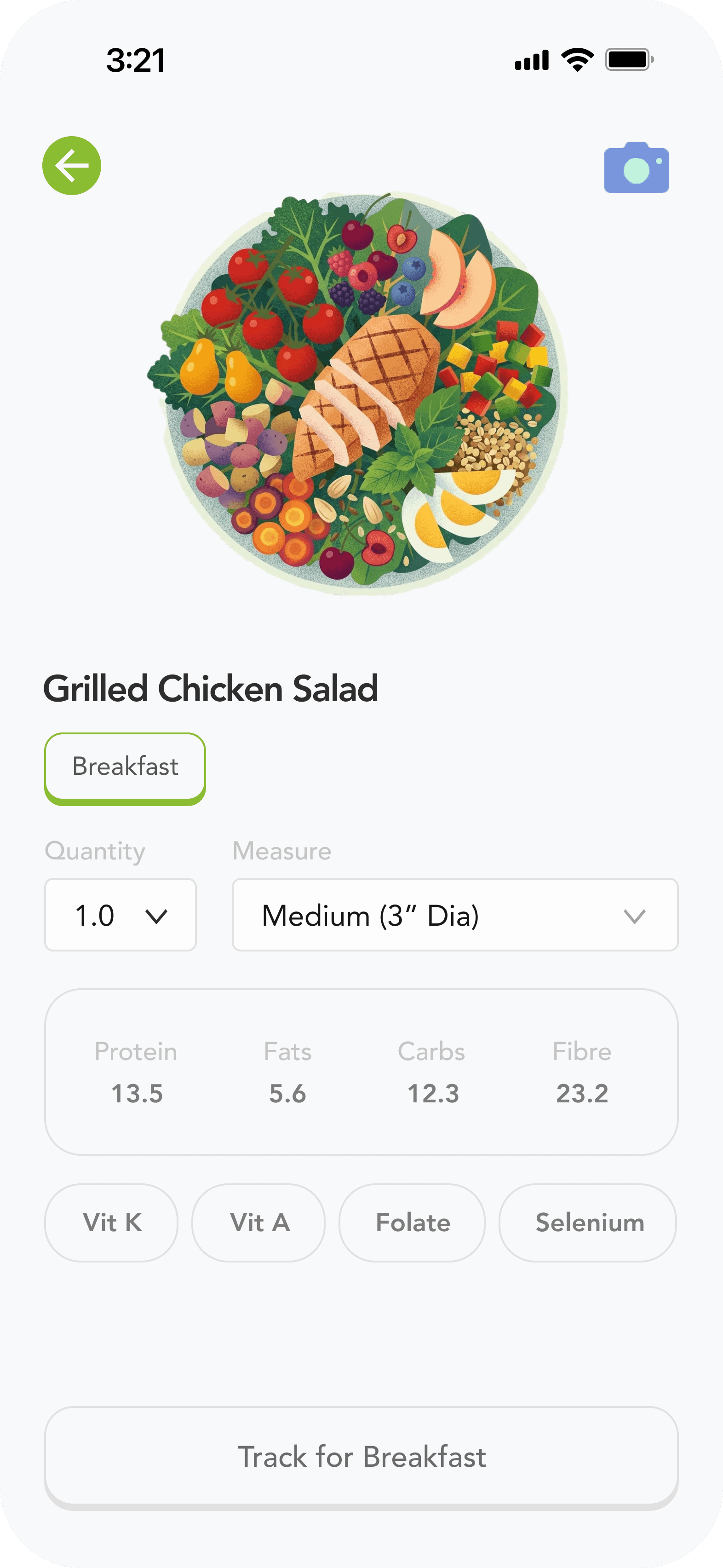
Traditional health apps are designed for users focused on weight loss and precise control over their diet. By prioritizing quantity over quality, these apps turn health tracking into a chore.
Traditional health apps are designed for users focused on weight loss and precise control over their diet. By prioritizing quantity over quality, these apps turn health tracking into a chore.
Traditional health apps are designed for users focused on weight loss and precise control over their diet. By prioritizing quantity over quality, these apps turn health tracking into a chore.
Insight 4
Insight 4
The Anxiety of Being Judged
The Anxiety of Being Judged
In a judgment-heavy environment like a college campus, doing a healthy activity alone can feel performative or awkward, creating a social friction that stops the behavior.
In a judgment-heavy environment like a college campus, doing a healthy activity alone can feel performative or awkward, creating a social friction that stops the behavior.
In a judgment-heavy environment like a college campus, doing a healthy activity alone can feel performative or awkward, creating a social friction that stops the behavior.
How might we lower the barrier to entry for health habits in students who feel overwhelmed by traditional fitness approaches?
How might we lower the barrier to entry for health habits in students who feel overwhelmed by traditional fitness approaches?
How might we lower the barrier to entry for health habits in students who feel overwhelmed by traditional fitness approaches?
What truly drives students
What truly drives students
What truly drives students
It’s not strict rules, but a sense of community that motivates students. When one person joins in, others follow. Students are more likely to take part if their peers are doing it too.
It’s not strict rules, but a sense of community that motivates students. When one person joins in, others follow. Students are more likely to take part if their peers are doing it too.
It’s not strict rules, but a sense of community that motivates students. When one person joins in, others follow. Students are more likely to take part if their peers are doing it too.
What finally worked
What finally worked
What finally worked
A gamified approach to overall wellness that encourages clean eating, staying active, and healthy sleep cycle: making healthy habits fun, social, and easier to stick to.
A gamified approach to overall wellness that encourages clean eating, staying active, and healthy sleep cycle: making healthy habits fun, social, and easier to stick to.
A gamified approach to overall wellness that encourages clean eating, staying active, and healthy sleep cycle: making healthy habits fun, social, and easier to stick to.
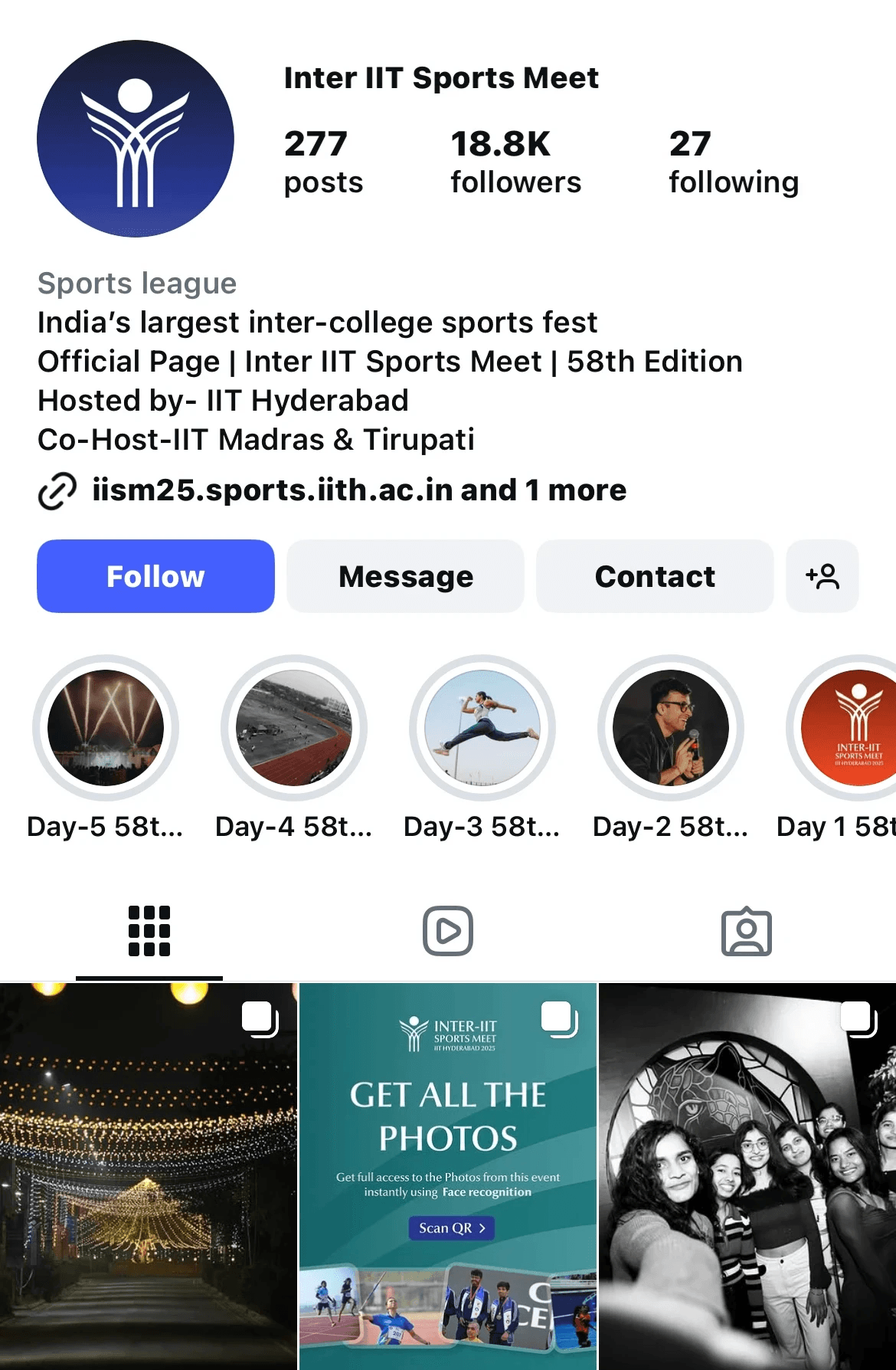
College sports meet are really popular among students and is taken as a yearly event. Taking this approach forward and making it an everyday thing
College sports meet are really popular among students and is taken as a yearly event. Taking this approach forward and making it an everyday thing
College sports meet are really popular among students and is taken as a yearly event. Taking this approach forward and making it an everyday thing



Tapping in Solution
Tapping in Solution
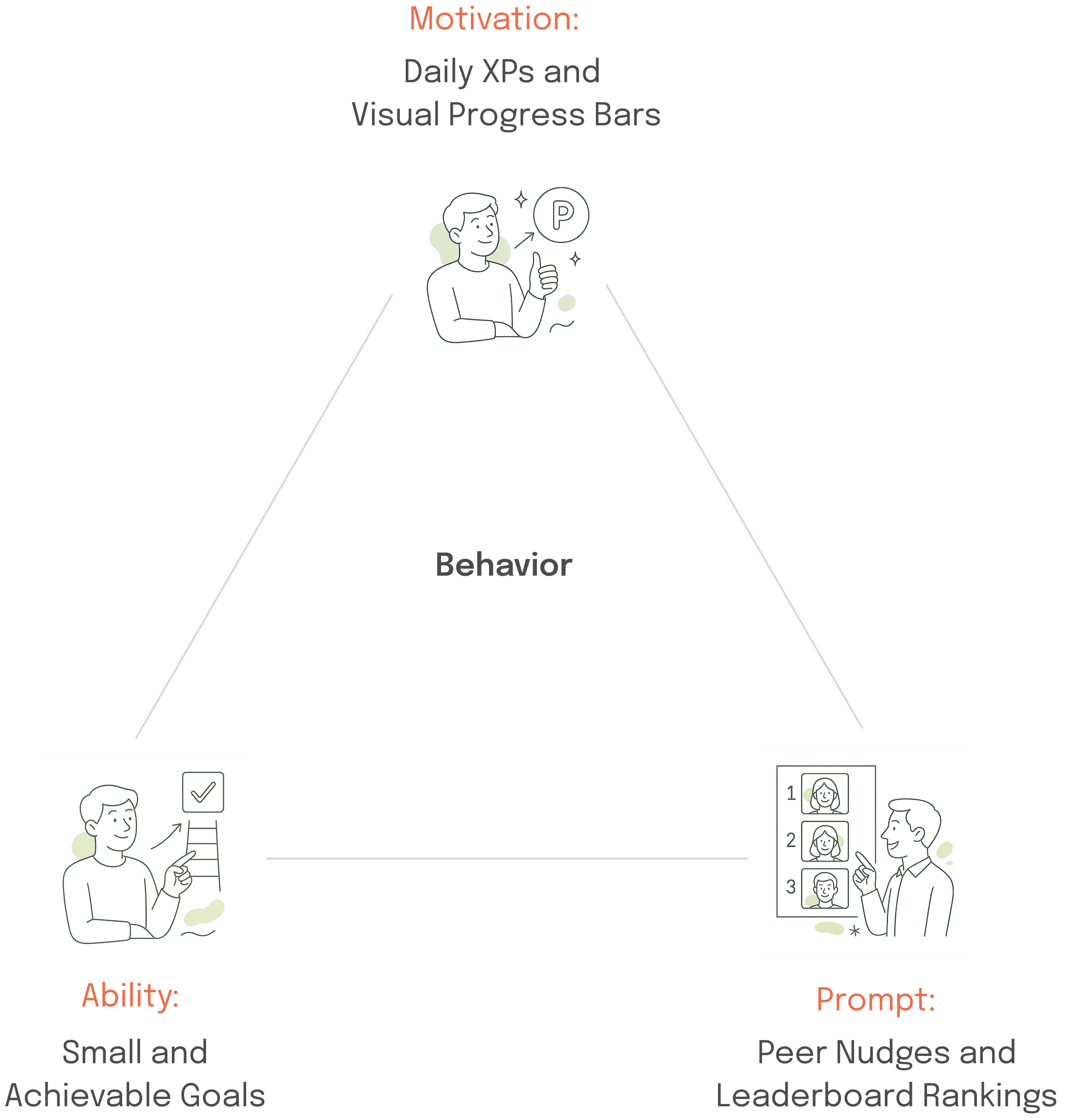
Fogg Behavior Model
Behavior happens when Motivation, Ability,
and a Prompt are present
at the same time.
Fogg Behavior Model
Behavior happens when Motivation, Ability,
and a Prompt are present
at the same time.
Turning Wellness into a Team Sport
Turning Wellness into a Team Sport
Turning Wellness into a Team Sport
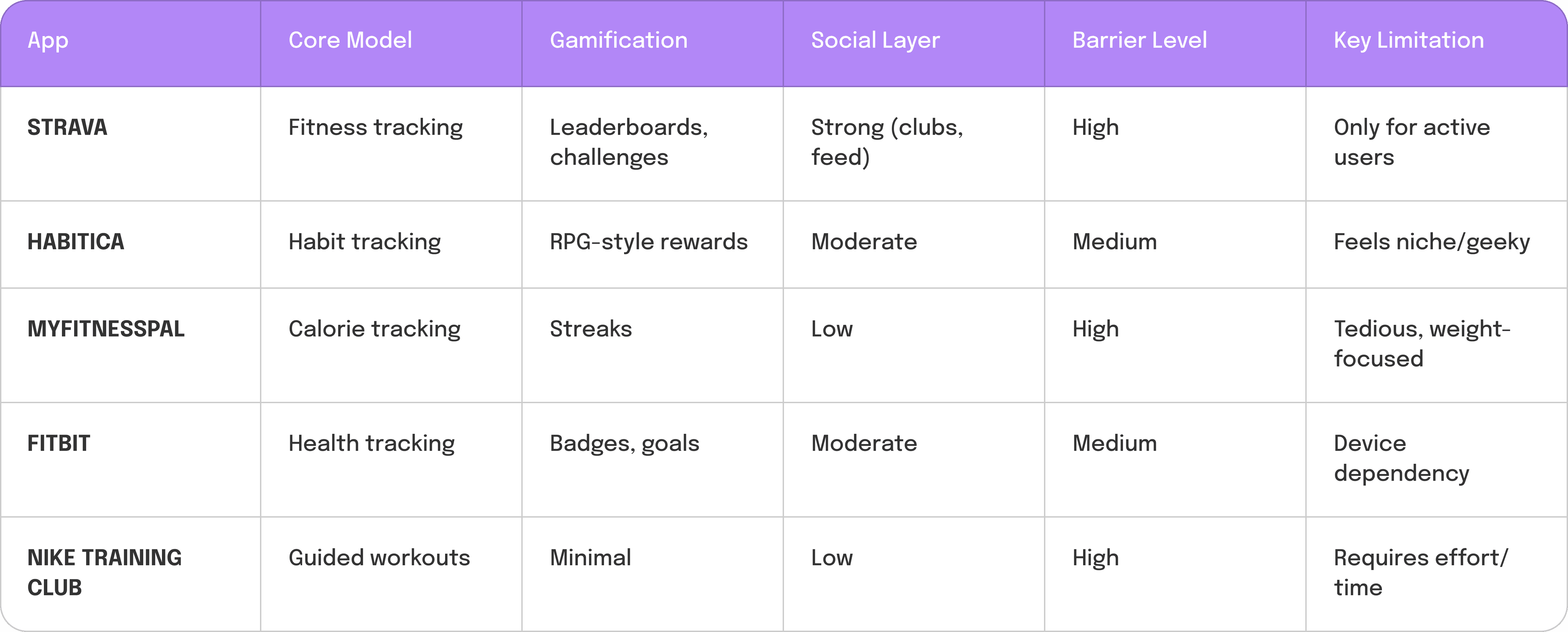
All apps had something in common, an Individual vs Them narrative, I wanted to focus on a Us vs. Them narrative to reduce the anxiety that comes with working out alone.
All apps had something in common, an Individual vs Them narrative, I wanted to focus on a Us vs. Them narrative to reduce the anxiety that comes with working out alone.
Club Architecture
Club Architecture
Club Architecture
Each club is built around a clear archetype. When students are assigned to one, they align with a persona they relate to, turning the club into something they belong to which helps drive long-term retention.
Each club is built around a clear archetype. When students are assigned to one, they align with a persona they relate to, turning the club into something they belong to which helps drive long-term retention.
Each club is built around a clear archetype. When students are assigned to one, they align with a persona they relate to, turning the club into something they belong to which helps drive long-term retention.


Club Sorting
Club Sorting
Club Sorting
Behind the scenes, users are evenly distributed to keep competition fair.
Behind the scenes, users are evenly distributed to keep competition fair.
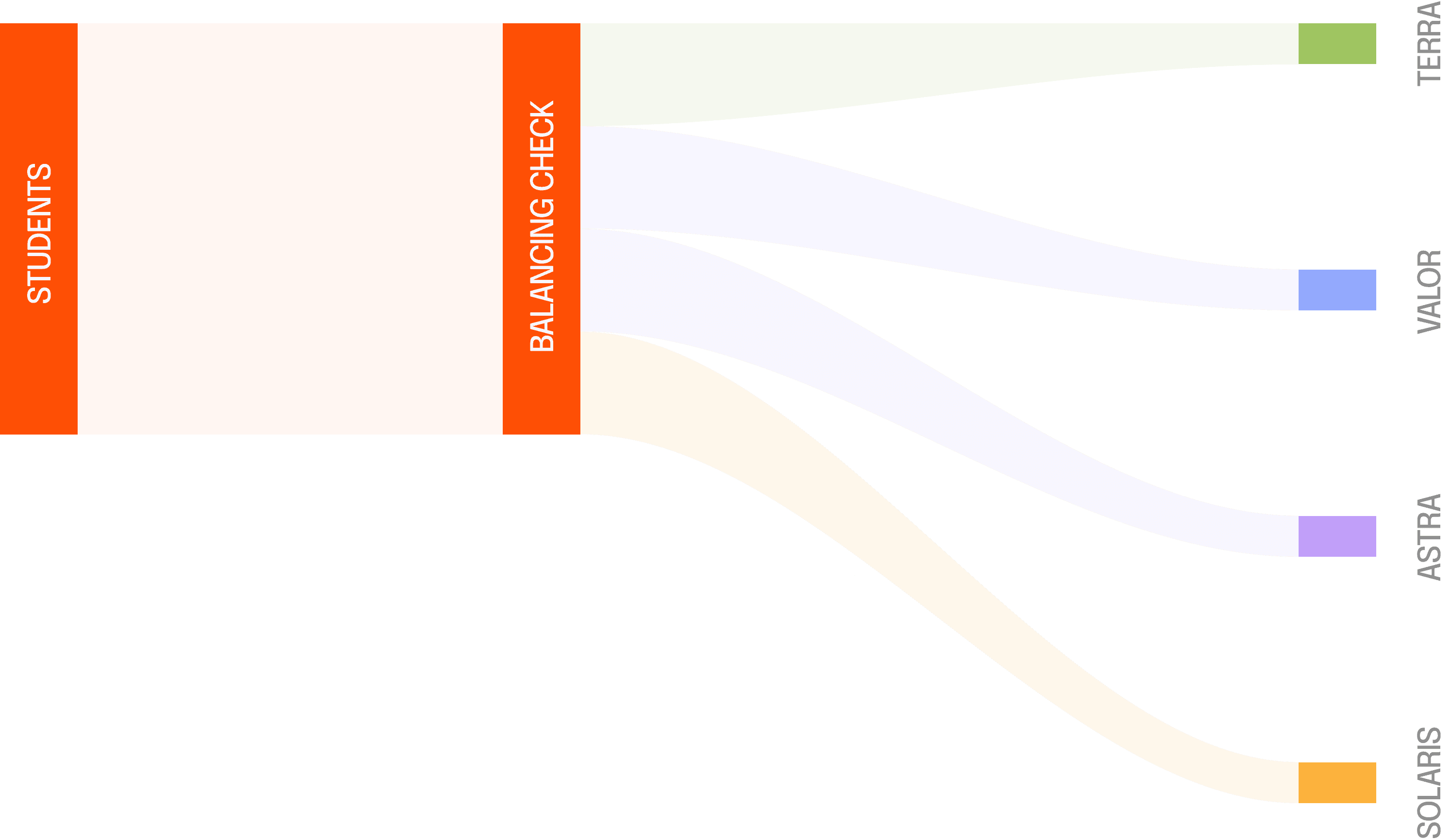
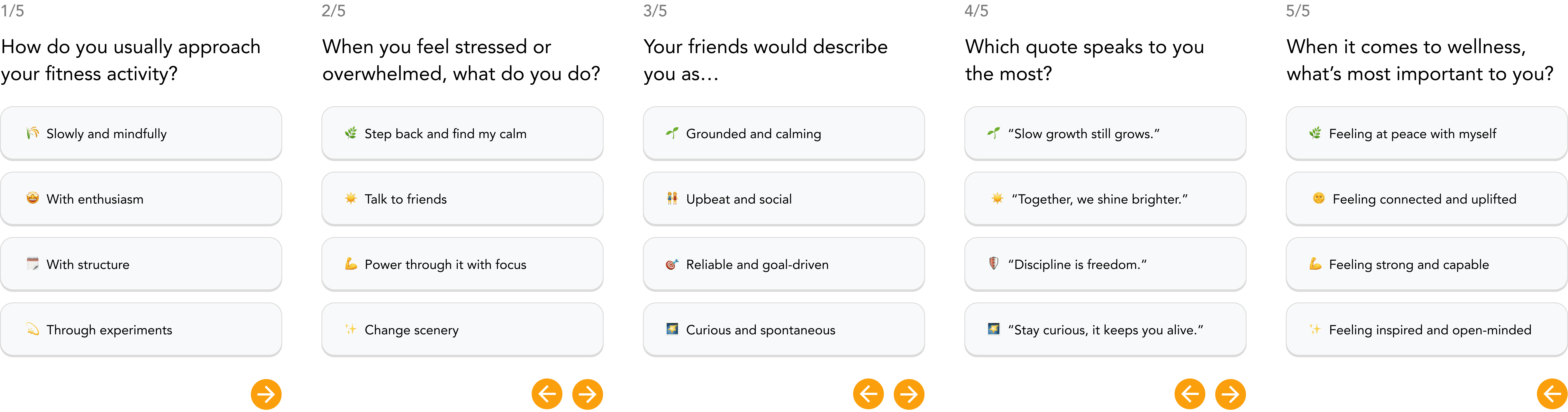
The onboarding quiz captures behavior, and social preferences.
The onboarding quiz captures behavior, and social preferences.
The onboarding quiz captures behavior, and social preferences.
Club Positions
Club Positions
Club Positions
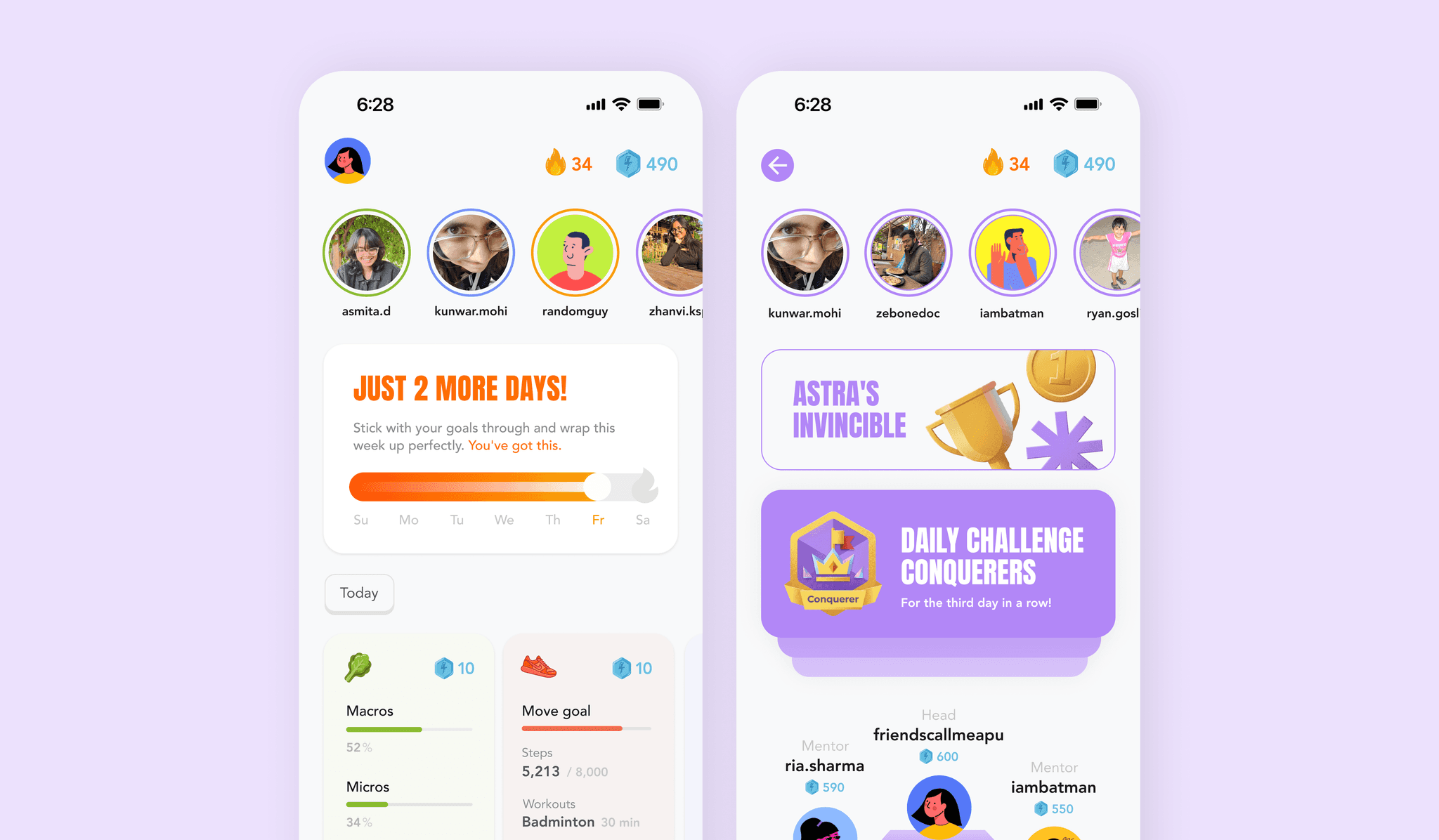
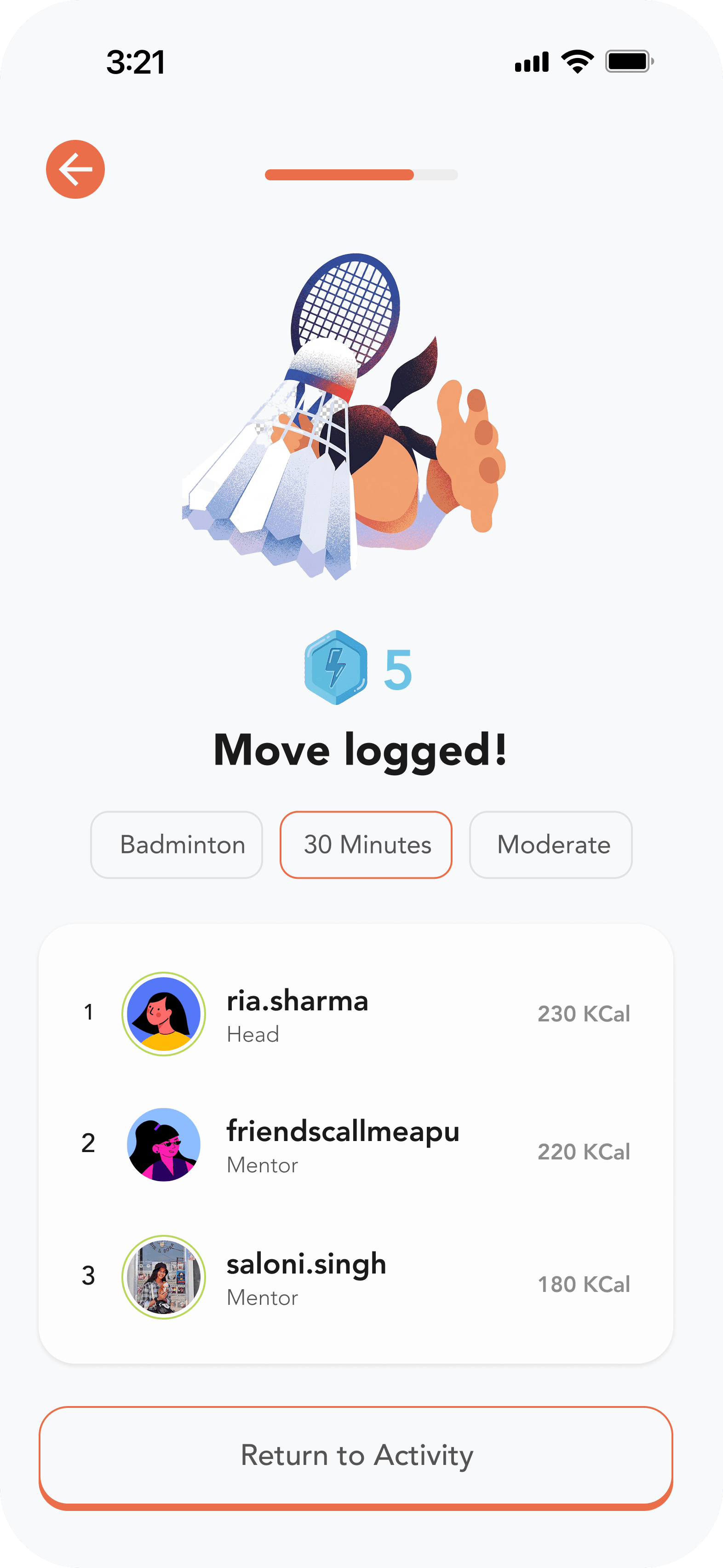
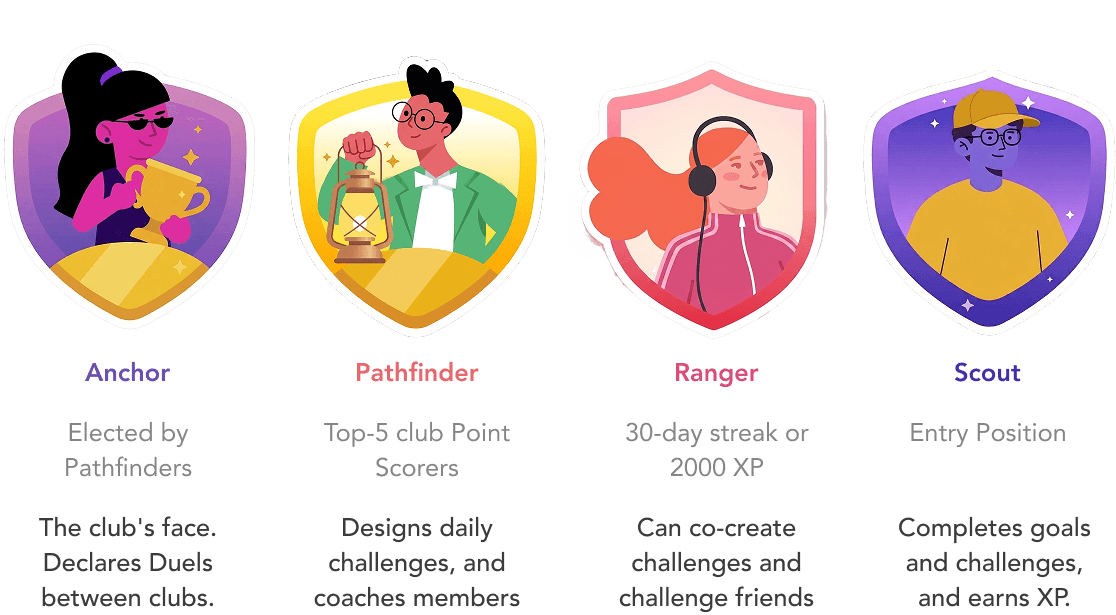
Each club follows a tiered progression system. Gaining XPs unlocks new capabilities, such as creating challenges or initiating duels, shifting users from passive participants to active contributors.
Each club follows a tiered progression system. Gaining XPs unlocks new capabilities, such as creating challenges or initiating duels, shifting users from passive participants to active contributors.
Each club follows a tiered progression system. Gaining XPs unlocks new capabilities, such as creating challenges or initiating duels, shifting users from passive participants to active contributors.
Earning XPs
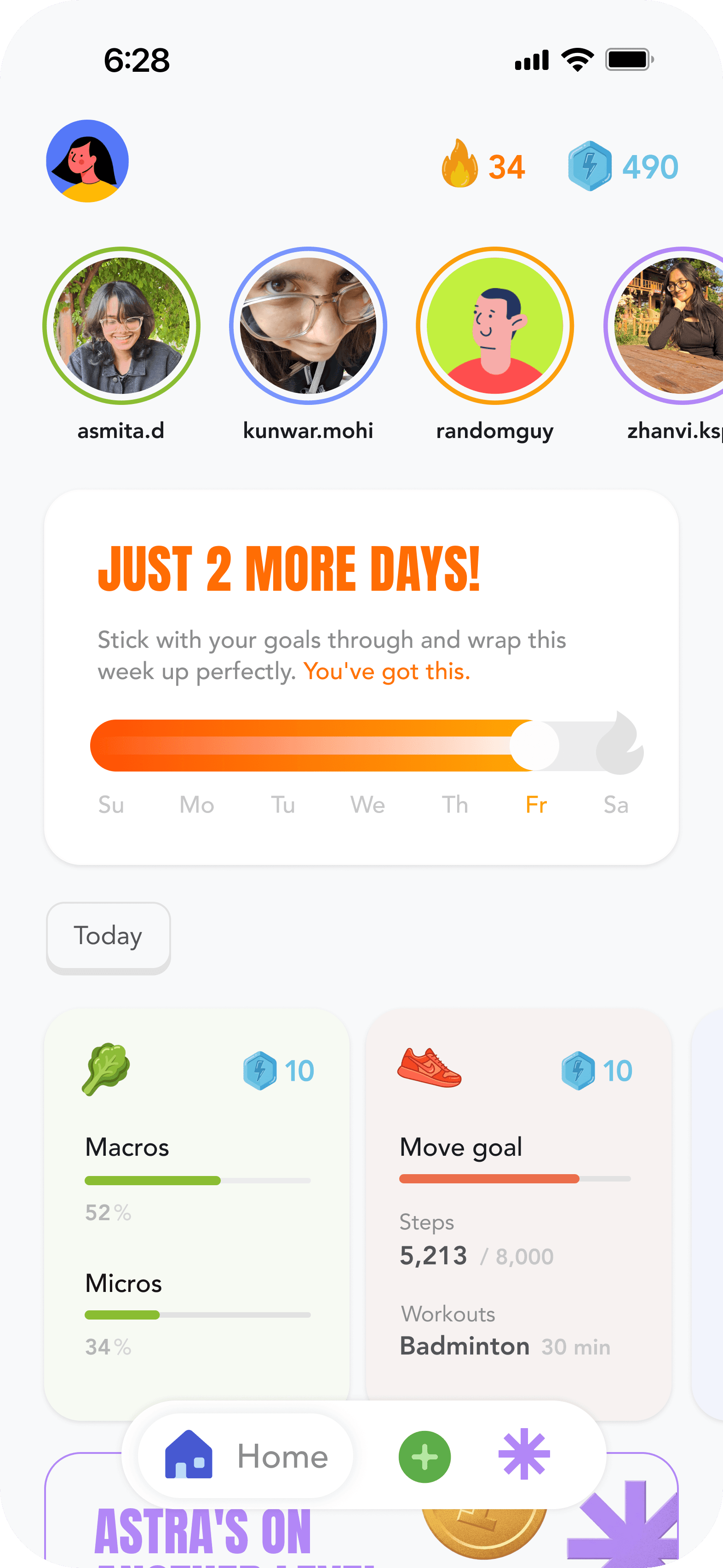
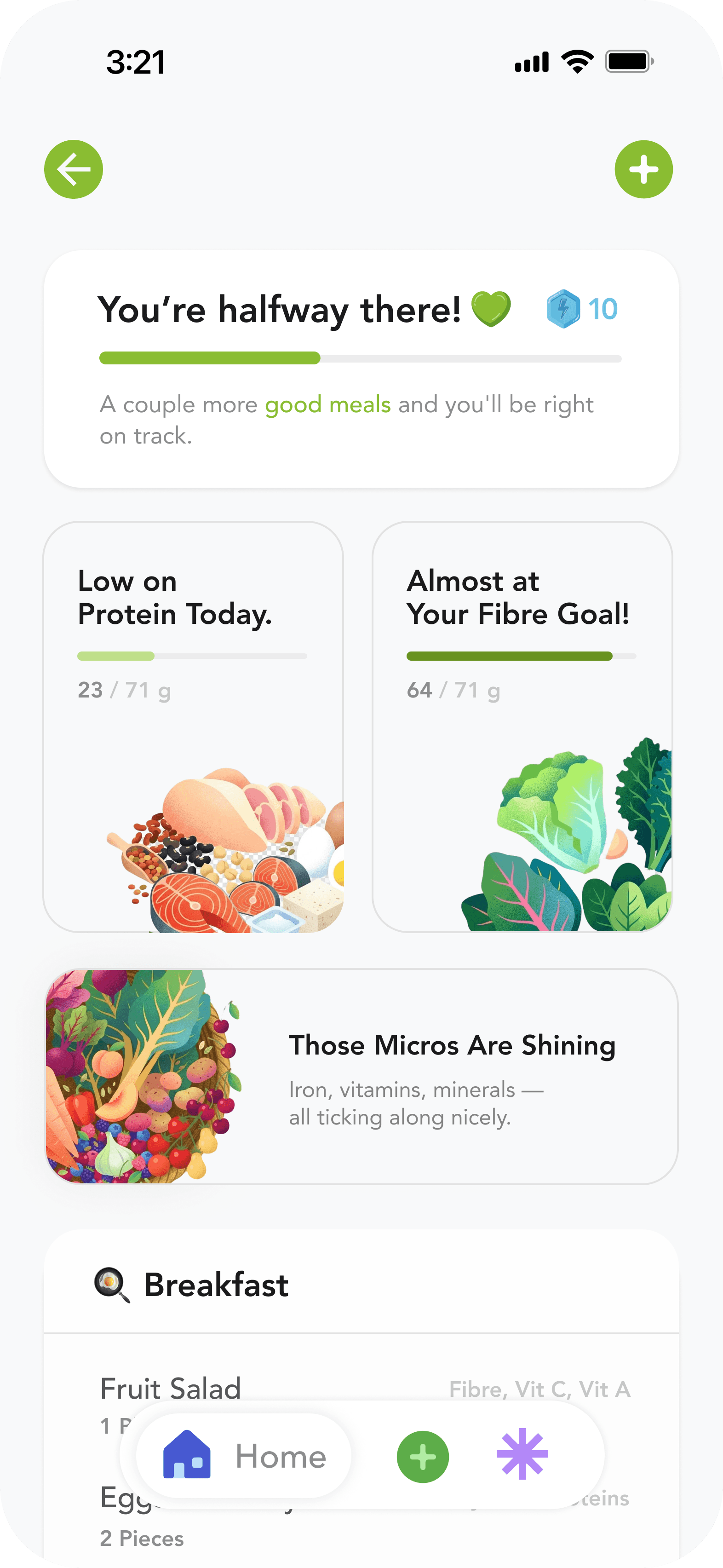
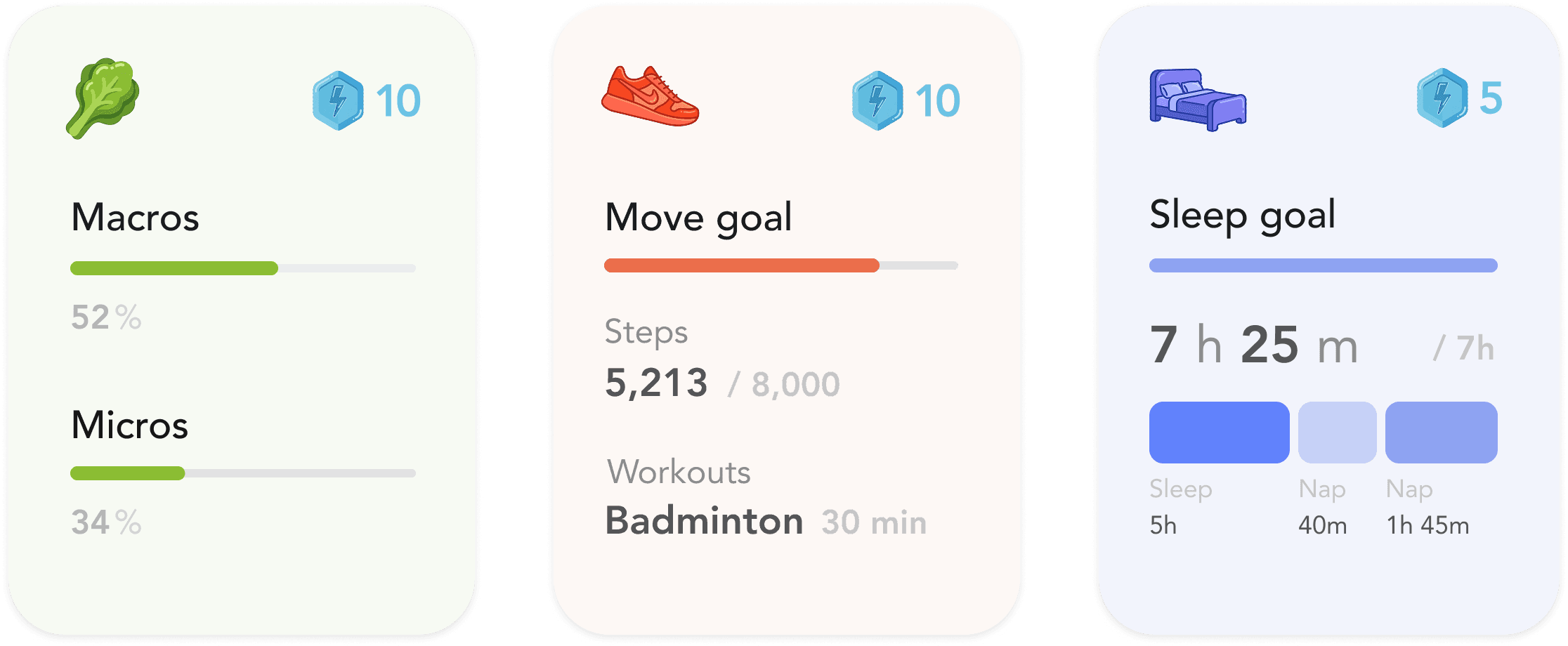
Achievable Daily Tasks
Achievable Daily Tasks
Achievable Daily Tasks
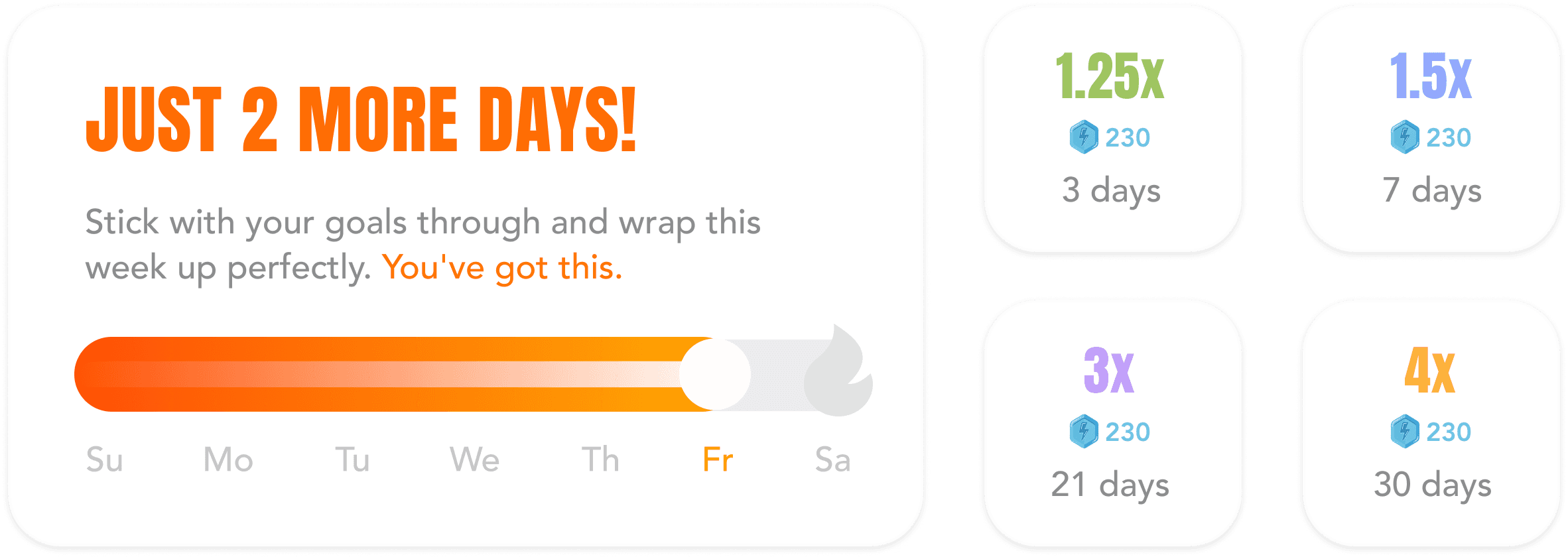
Streak - XP Multipliers
Streak - XP Multipliers
Streak - XP Multipliers
Extra Motivators
Story Mechanics
Story Mechanics
Story Mechanics
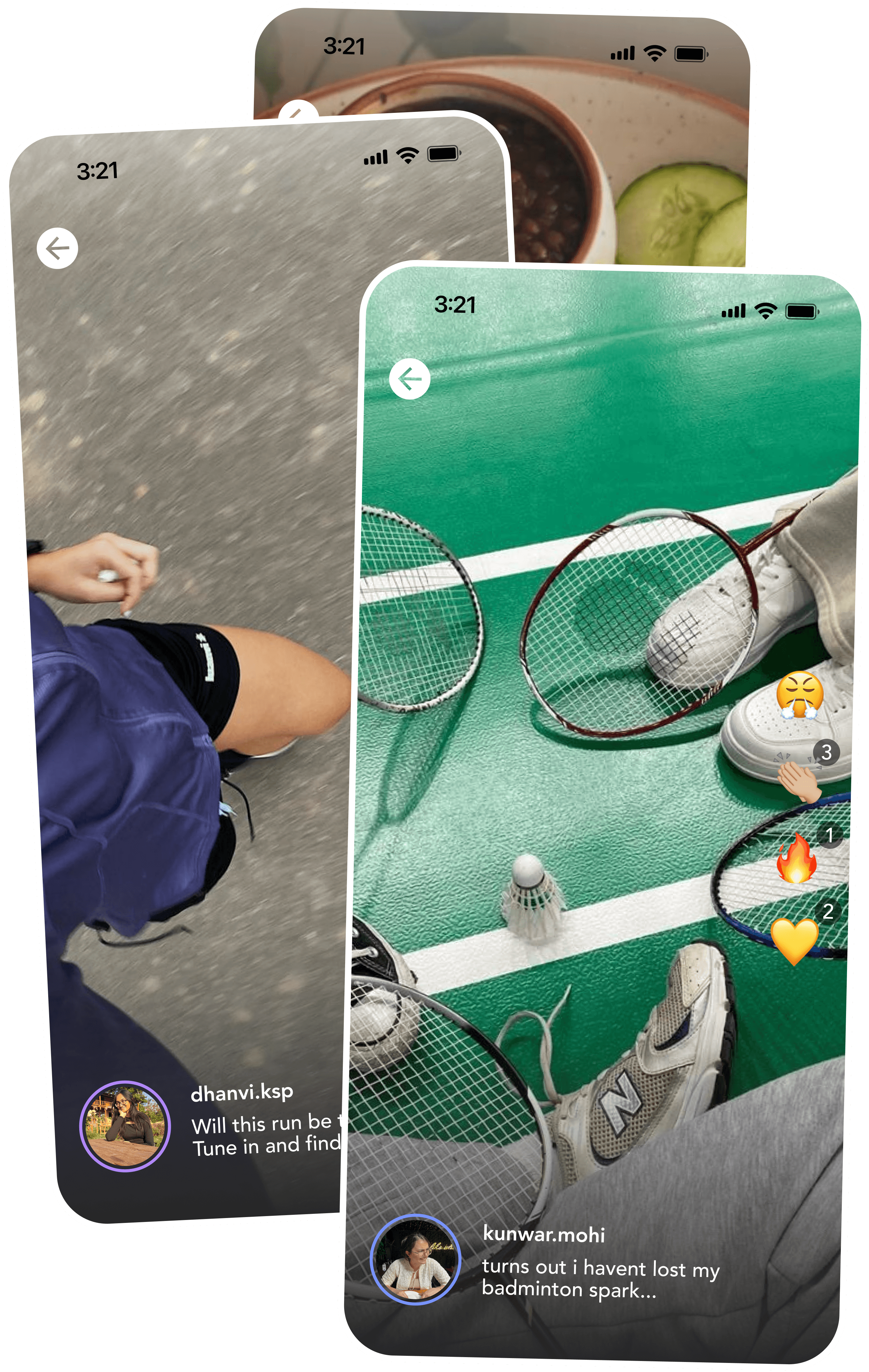
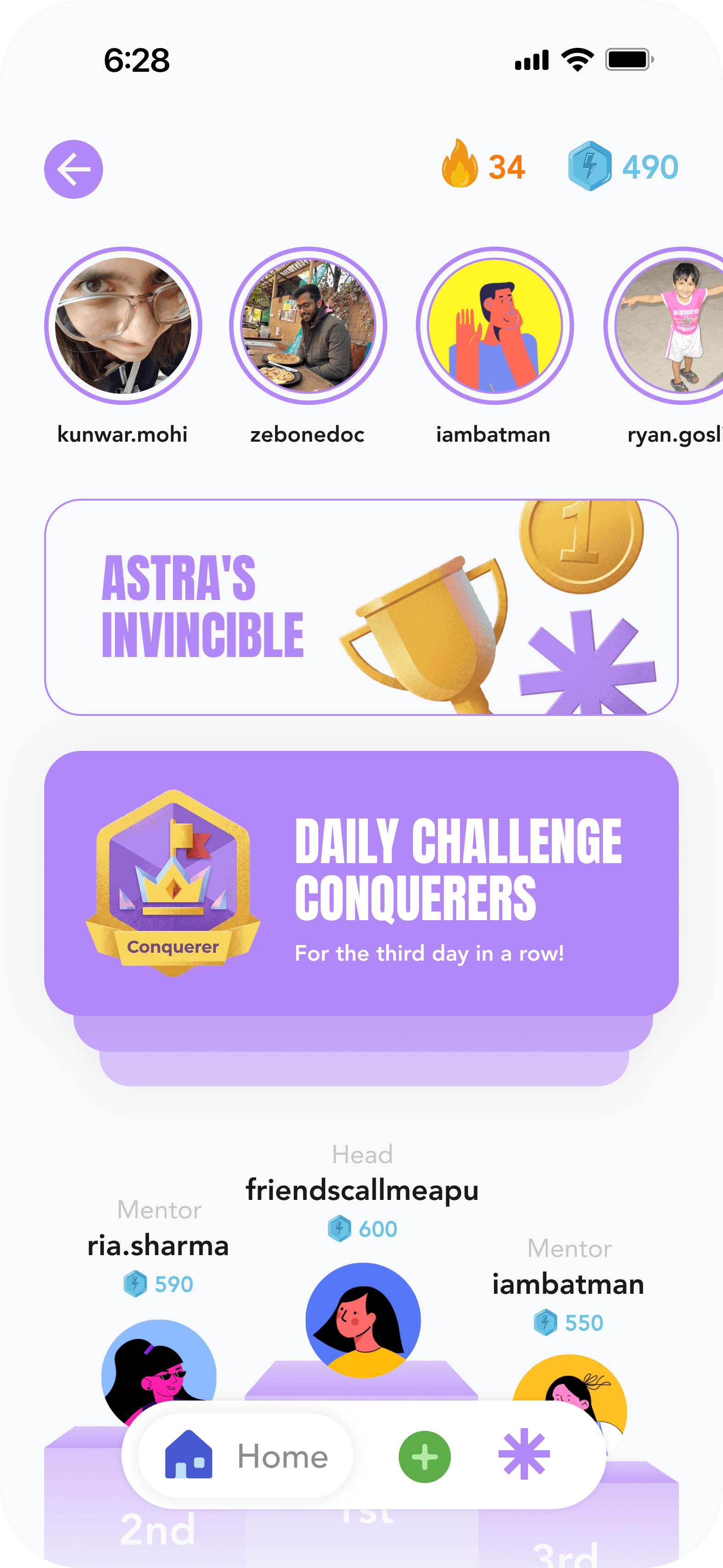
Short 24-hour stories that will be visible to the whole campus, motivates students to continue healthy living.
Short 24-hour stories that will be visible to the whole campus, motivates students to continue healthy living.

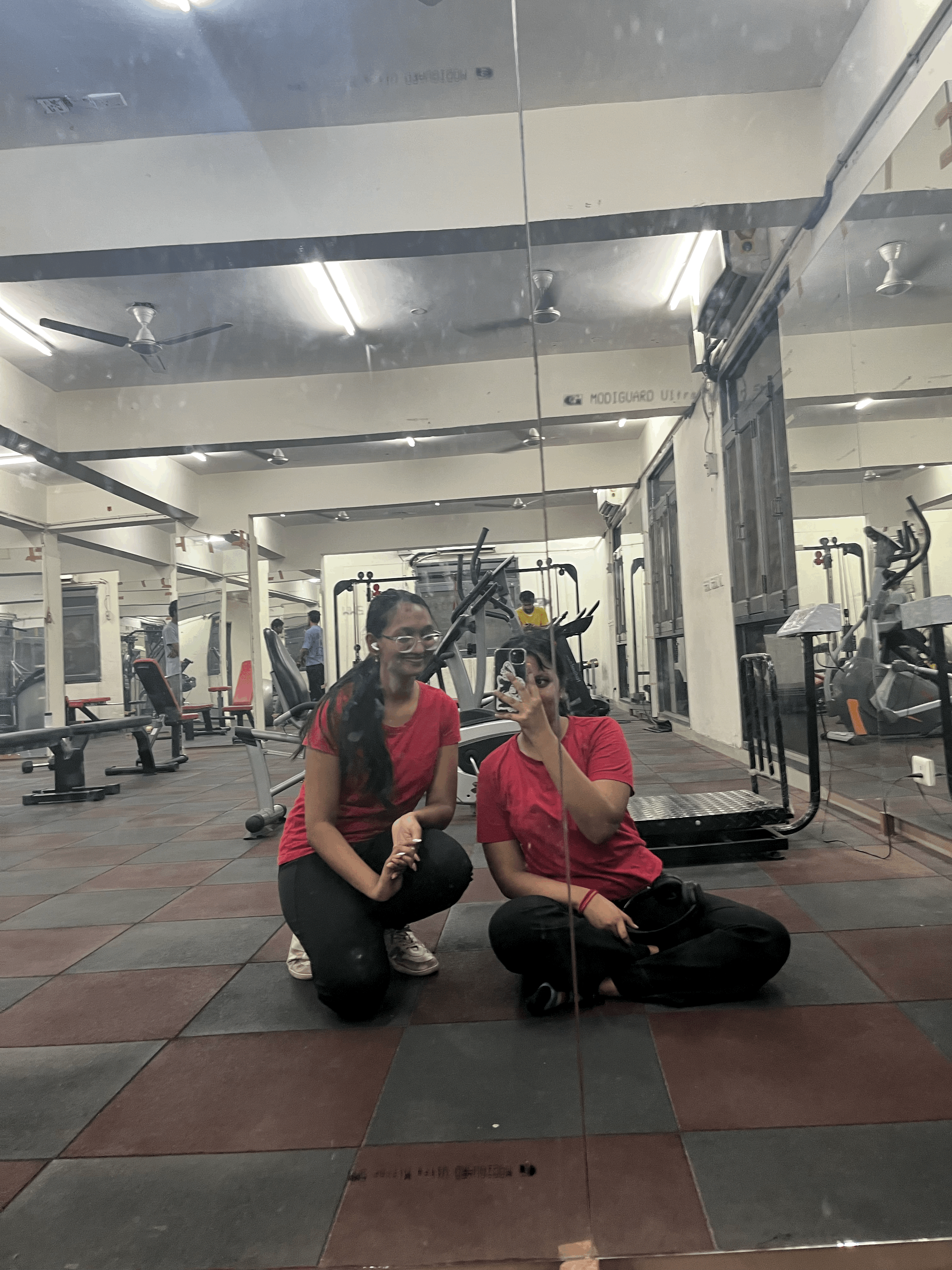
(Shoutout to my friends for letting me use their picture <3)
(Shoutout to my friends for letting me use their picture <3)